
Andrew William
Consulting Editor
Wild CampingNortentBackpacking Tent
The Nortent Vern 1 PC tent review: a tank of a single-skin shelter that comes with a ton of tricks up its sleeve
In a world of ultralight and ultra-flimsy packable backpacking tents, the Nortent Vern 1 PC stands out as a unique and powerful shelter that makes easy work out of the worst conditions the UK could ever throw at it.
✓ Specialist ChoiceNortent Vern 1 PC
Weight~3.5 kgFlysheetPolycottonPrice~£490
The good✓ Unbeatable wind performance
✓ Incredibly easy to pitch
✓ Small footprint
✓ Gorgeous design
✓ The quietest tent we’ve ever tested
The not-so-good✗ Comparably heavy for a 1-person backpacking tent
Buy from Valley & Peak →
At a glance
| Brand | Nortent (Norway) |
| Model | Vern 1 PC (Polycotton) |
| Price | ~£490 (Valley & Peak, inc. crossing poles) |
| Weight | ~3.5 kg |
| Flysheet | Polycotton canvas |
| Structure | Single-skin tunnel tent |
| Key features | Two crossing poles, large vestibule, double doors, snow skirts, stove compatible |
| Ideal for | 4-season wild camping, winter backpacking |
| Not suitable for | Gram-counting fastpacking |
The Nortent Vern 1 PC review
Nortent’s Vern 1 is one of our highest-rated tents of 2023. Lightweight, super strong, easy to pitch and beautiful to look at, it delivers on so many markers of what makes a good tent that we’re still excited about it almost a year after first testing it here at the GBAC. But is there a way to make it better? The Vern 1 PC builds on the tried and tested design of the original Vern 1 by adding an extra crossing pole and a brand-new fly: a polycotton canvas that, when pitched, makes for the tightest and most durable tent fly we’ve ever seen. The trade-off, of course, comes in the form of weight and pack size, both of which are substantially bigger on the polycotton variant.
The Nortent Vern 1 PC is a single-skin backpacking tent where the flysheet is made out of polycotton. And while this material has long been used in tents dating back decades, the fact that Nortent has been bold enough to add it to a backpacking tent — something the industry tells us needs to be super light and super packable — makes it one of the most innovative moves we’ve seen in recent years. Granted, it increases both the pack size and the weight when compared to the original Vern 1, but the result is a shelter that’s the closest thing we’ve ever seen to a portable brick house.
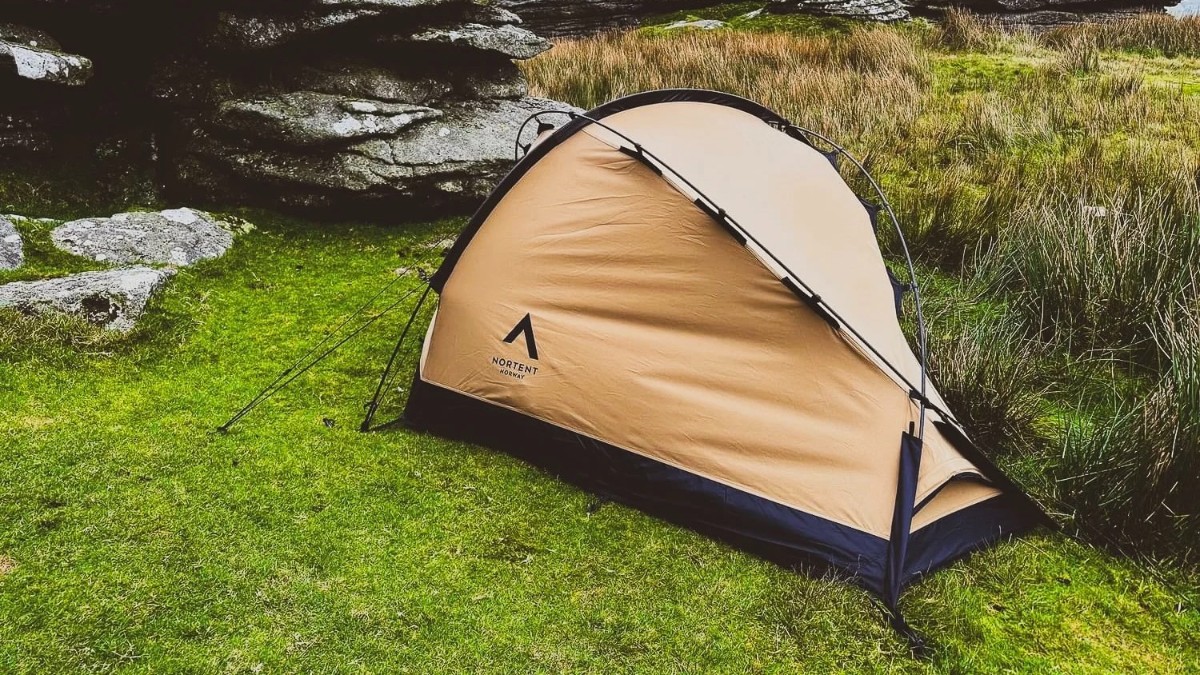
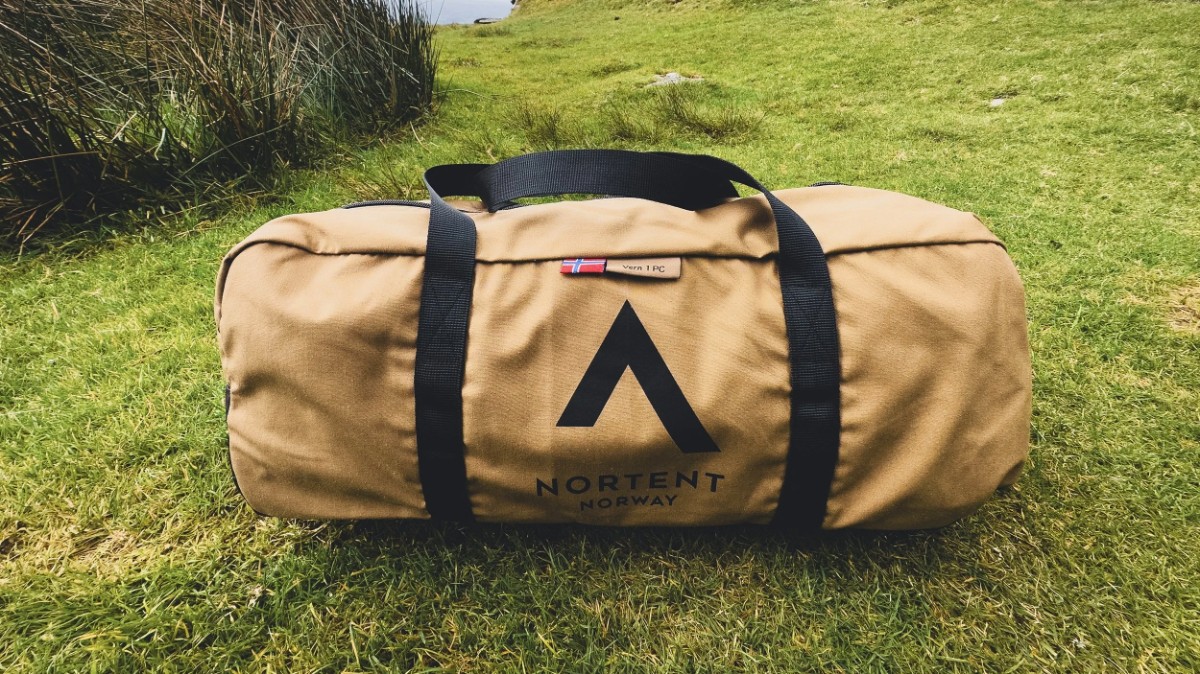
The Vern 1 PC is about twice as heavy and has a pack size about twice as large as the original Vern 1, coming in at 3.5 kg. Offering substantially better performance in truly horrendous weather, however, it could be argued that the Vern 1 PC is here for those trips when weight isn’t the most important factor. In that sense, we see the Vern 1 PC as more of a cousin of the original Vern 1, rather than a polycotton competitor of the same tent.
At the time of writing, the Nortent Vern 1 PC costs £489.99 when bought directly from Valley and Peak. It is worth checking if you can get a better deal when purchased directly through Nortent — at time of writing, buying direct and factoring in shipping and import VAT came to around £412.
| Ready for your next adventure?Sleep wild in Britain’s most beautiful national parksJoin guided wild camping adventures across the Scottish Highlands, Dartmoor, Eryri and more.Browse wild camping trips → |  |
Our experience using the Nortent Vern 1 PC
To test this tent, we took it out on a ton of adventures in autumn and winter conditions up and down the UK. We had it out on around half a dozen one-nighters up on Dartmoor National Park where we got to put it up against howling wind, driving rain and a deluge of snow, and we used it on a multi-day circular hike of Llyn y Fan Fach and Llyn y Fan Fawr in the western fringes of Bannau Brycheiniog National Park. This allowed us to properly experience what it feels like to carry the supposedly ‘heavy and bulky’ Vern 1 PC over 3 days in sub-zero conditions over high mountains and across steep valleys.
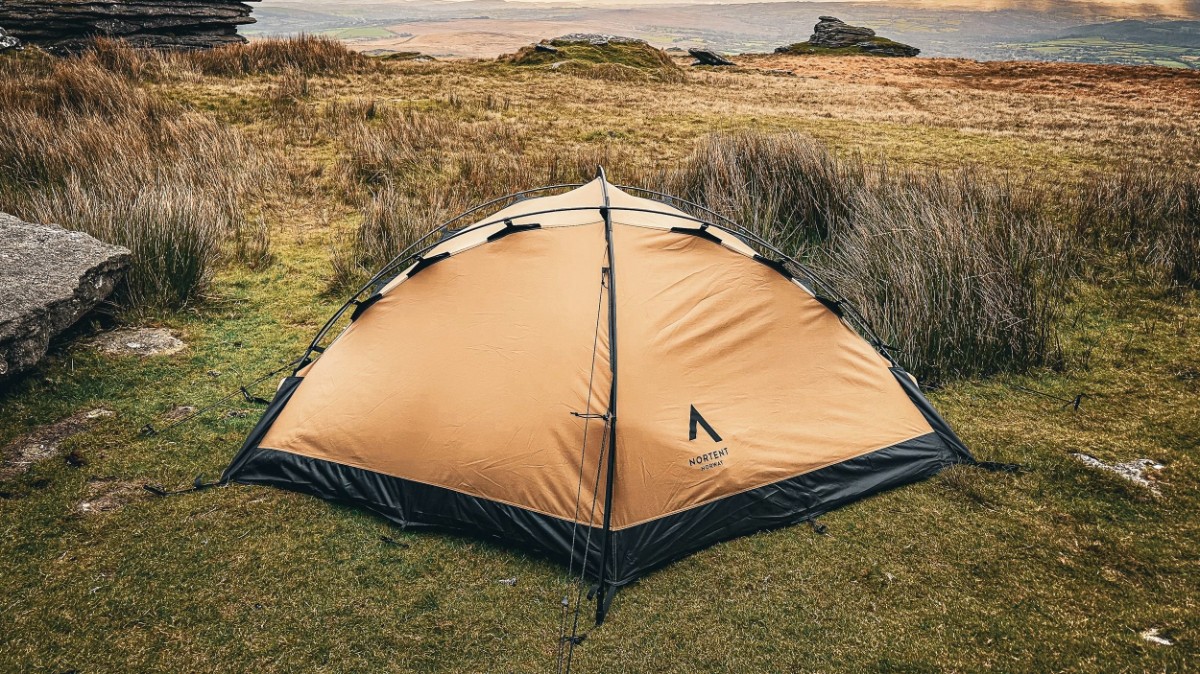
The second we pitched the Vern 1 PC, however, it just felt special. It comes with two crossing poles that sit over the top of the tent that need to be installed to hold up the heavy polycotton fly. Pitching it is therefore simply a matter of adding the poles to their respective sleeves, clipping the fly to the frame and pegging out the various corners. This can be done in a matter of minutes and is a welcome improvement on the original Vern 1 design, which can be a little finicky to set up correctly, especially in high winds.
What’s more, the Vern 1 PC immediately just pops into shape the second the fly is clipped to the poles. You only need 4 pegs to anchor this thing to the ground (though additional guy lines and peg-out points are available in the worst weather) and everything feels incredibly tight even without any of the guy lines pegged out.
Features and performance
Internal space and livability
Once up, the Vern 1 PC gives you access to a large vestibule and a cavernous sleeping space, similar to that provided by the original Vern 1. Due to the lack of an inner tent, however, you’ve more space to move around in here, ideal for spreading out bits of kit that you might need at night. There are several handy pockets stitched inside, including one parallel to your head. Due to the thickness of the materials, there’s also no flapping — anywhere. The door can easily be opened with one hand, and the vestibule stays rigid through the night.
The polycotton flysheet in practice
One of the main advantages manufacturers tout about polycotton is its breathability compared to standard silnylon or polyester constructions. In our experience, this seemed valid on the Vern 1 PC. On the coldest nights — when the mercury hit −7°C on a chilly wild camp in West Wales — there was still some moisture on the underside of the tent. But compared to normal flysheets, this felt like less of a burden. With a silnylon single-skin tent, moisture forms on the flysheet and drips back down onto you. With the polycotton fly on the Vern 1 PC, the moisture would just sit there: it wouldn’t drip or run, even when you tapped the material. It was almost like it had partially absorbed into the polycotton, which made for the most comfortable night’s sleep we’ve ever had in a single-skin tent.
That said, on night one of our 3-dayer around Llyn y Fan Fach and Fawr, the temperature dropped so much that the entire underside of the polycotton fly completely froze over. When you compare that with the average temperature we were able to maintain in the original Vern 1 while camping in similar conditions, it would make us think twice about camping in it in conditions substantially below zero. In those extremes, the nylon inner of the original Vern 1 seemed to do a better job at forming a barrier between the freezing cold outside and the body-heated climate inside.
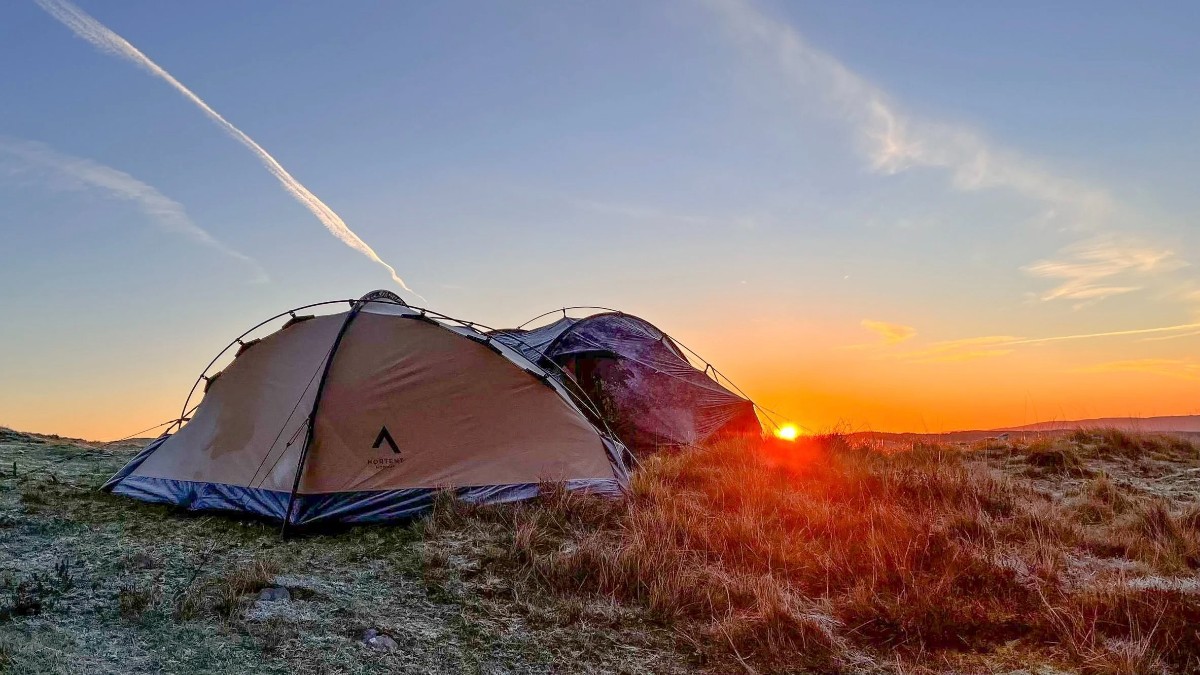
“You only need 4 pegs to anchor this thing to the ground, and everything feels incredibly tight even without any of the guy lines pegged out.”
During our testing, we were also happy to see that the tent is as simple to pack away as it is to pitch. Despite the thickness of the fly, we were expecting it to be difficult to pack back in the small stuff sack the morning after — especially considering it seemed like it might have absorbed some water. This turned out to be completely unfounded, going down almost as quickly as it went up and easily packing back into its carry case. It is worth noting that the Vern 1 PC does take a little longer to air out than the original Vern 1 — around 24 hours in our experience — presumably due to the thickness of the materials.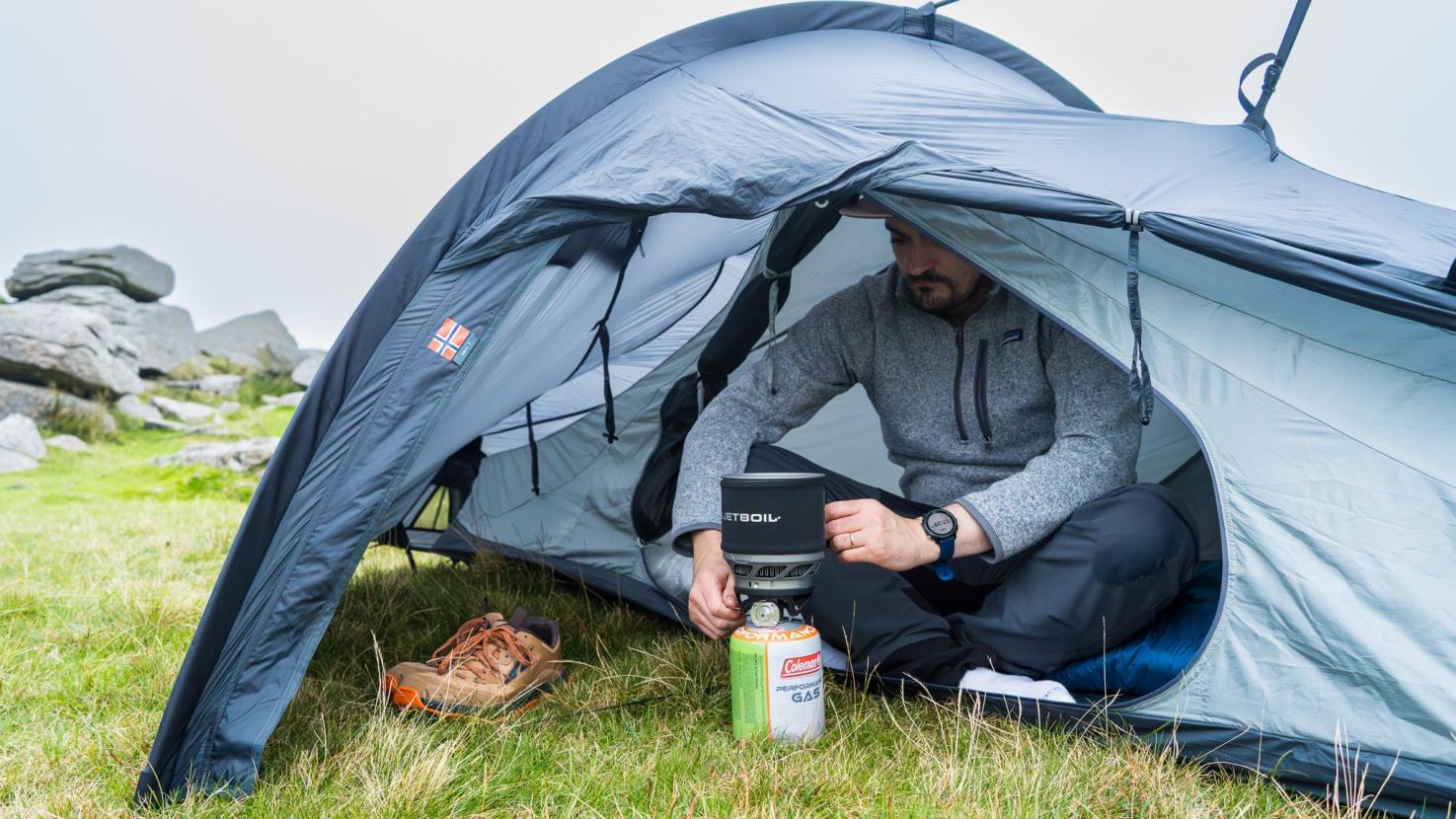 Buy from Valley & Peak →
Our verdictOne of the most capable solo shelters on the market — if you can handle the weight.Overall, we think the Vern 1 PC is an excellent tent. Pitched, it simply looks beautiful out in the hills. Due to the thickness and durability of the materials, there’s simply nowhere where we wouldn’t pitch it. If you can get pegs in the ground, you can have a comfortable night in the Vern 1 PC — whether it’s raining, snowing or gale-force winds are driving into your tent. The confidence this gives you as a user is unrivalled in the one-person backpacking tent space right now. Granted, carrying 3.5 kg isn’t for everyone, and it’s probably overkill in any situation where the weather is predictably calm. But if you want a shelter that can put up with everything you can throw at it — we think you’d struggle to find anything better.Buy from Valley & Peak →
FAQs
How does the Nortent Vern 1 PC perform in the summer?Very well — the large vestibule and double doors can be opened wide for maximum ventilation in warm conditions.
How does the Nortent Vern 1 PC perform in the winter?Excellently in most UK winter conditions. The polycotton fly eliminates condensation drips and the two crossing poles provide outstanding structural integrity. In temperatures substantially below zero the fly can freeze over — something to plan for.
How does the Nortent Vern 1 PC perform in the wind?Outstandingly. The two crossing poles and tight polycotton fly create an incredibly rigid structure requiring only 4 pegs to anchor in most conditions.
How easy is it to pitch the Nortent Vern 1 PC?Very. Add poles to sleeves, clip the fly, peg out the corners — quicker and less finicky than the original Vern 1. Done in minutes even in wind.
Is the Nortent Vern 1 PC worth the money?If you can handle the weight and want the most confidence-inspiring solo shelter available, yes. At ~£490 from Valley & Peak it’s premium — but it’s the closest thing to a portable brick house we’ve ever pitched.
About the Author
Andrew William
Consulting Editor
Andrew William is an outdoor photographer, filmmaker, and drone operator working across the UK outdoor and adventure industry. He works with brands, organisations and expeditions to tell stories through photography and film.
An outdoor gear nerd at heart, Andrew loves testing kit in all conditions, from mountain days to long-distance trails. He’s passionate about adventure, expeditions, endurance and, above all, the people and stories that make getting outdoors so rewarding.