Wild CampingNaturehikeBackpacking Tent
Naturehike Cloud Up 3 review: a beloved budget UL tent that outperforms all expectations
A well-made, lightweight tent that comes in at an unbeatable price.
✓ Best BuyNaturehike Cloud Up 3
Weight2.24 kgCapacity3-personPrice~£170
The good✓ Amazing value for money
✓ Lightweight at 2.24 kg
✓ Very easy to pitch
✓ Excellent rain performance (20D silnylon fly)
✓ Tons of room inside
✓ Big vestibule for cooking and storing kit
✓ 6+ years of field-tested durability
The not-so-good✗ One entrance only
✗ Vestibule zip only goes in one direction
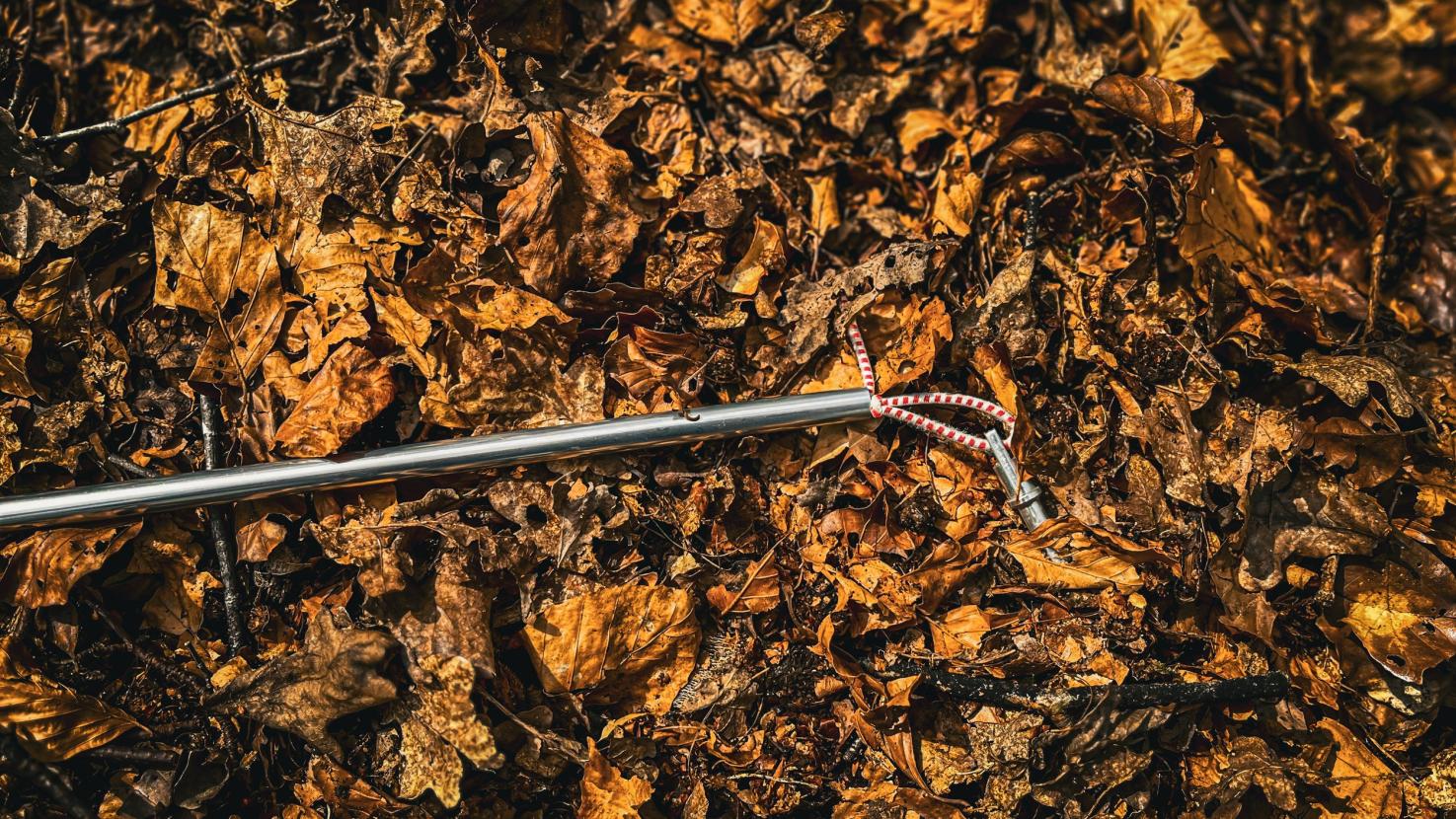
✗ Pole tips pop out when packing down
✗ No transparency on manufacturing ethics
Check price on Amazon →
At a glance
| Brand | Naturehike |
| Model | Cloud Up 3 |
| Price | ~£170 (Amazon); import taxes may apply if bought from overseas |
| Weight | 2.24 kg |
| Flysheet | 20D silnylon |
| Inner width | 180 cm |
| Pitch style | Inner-first (poles can be erected over groundsheet only) |
| Ideal for | Lightweight backpacking, thru-hiking, bikepacking, campsite camping |
| Not suitable for | Deep winter wild camps, summit camping, snowy conditions |
Overview
If you have not heard of Naturehike, we have to ask where you have been for the last few years. Emerging onto the scene a few short years before the pandemic, they have quickly become one of the biggest brands in the UK wild camping space, with the Cloud Up series being one of their most popular and commonly-seen lines. Alongside the hardier (and 4-season) Cloud Peak series, Naturehike has taken tried and tested designs from the likes of MSR and Hilleberg and mastered the art of making these to a strict budget, with the price being almost as groundbreaking as the designs were when the premium brands first brought them to market.
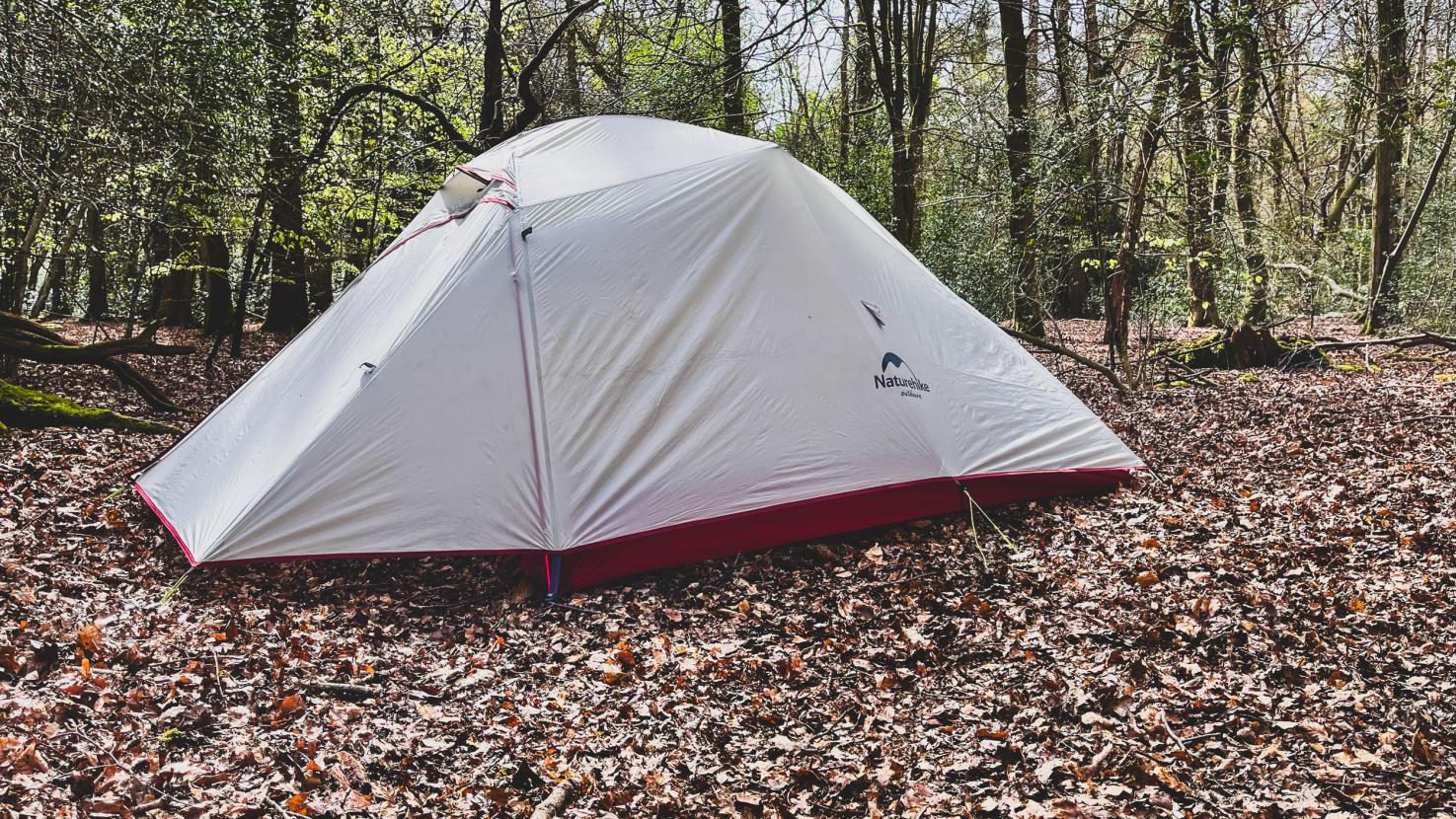
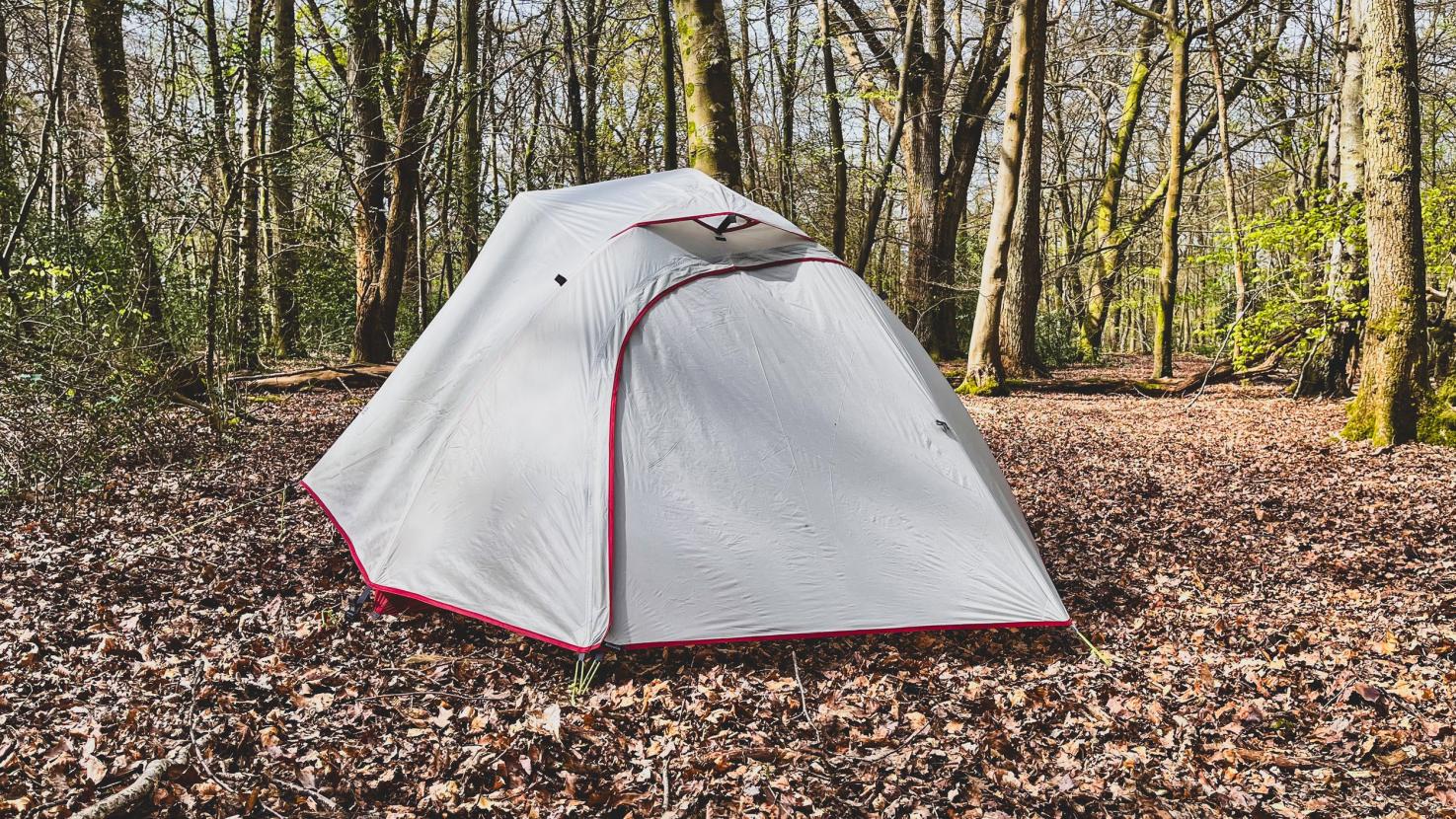
The most spectacular thing about the Naturehike Cloud Up 3 is undoubtedly the price. Depending on where you pick yours up, it will only set you back around £170 (not including import taxes if bought from overseas). Compare this to the £670 Mutha Hubba NX from MSR or the £430 Fly Creek UL 3 from Big Agnes, and it is clear what the Cloud Up’s unique selling point is. That being said, it only takes a little digging to see that this tent represents more than just a bargain. Weighing in at 2.24 kg, it is reasonably lightweight and packs down to a small and manageable size — especially for a 2-person and kit-sized tent. Featuring a 20D silnylon fly, the tent is reliably waterproof and surprisingly durable, and it is simple to put up and pack away.
How we tested
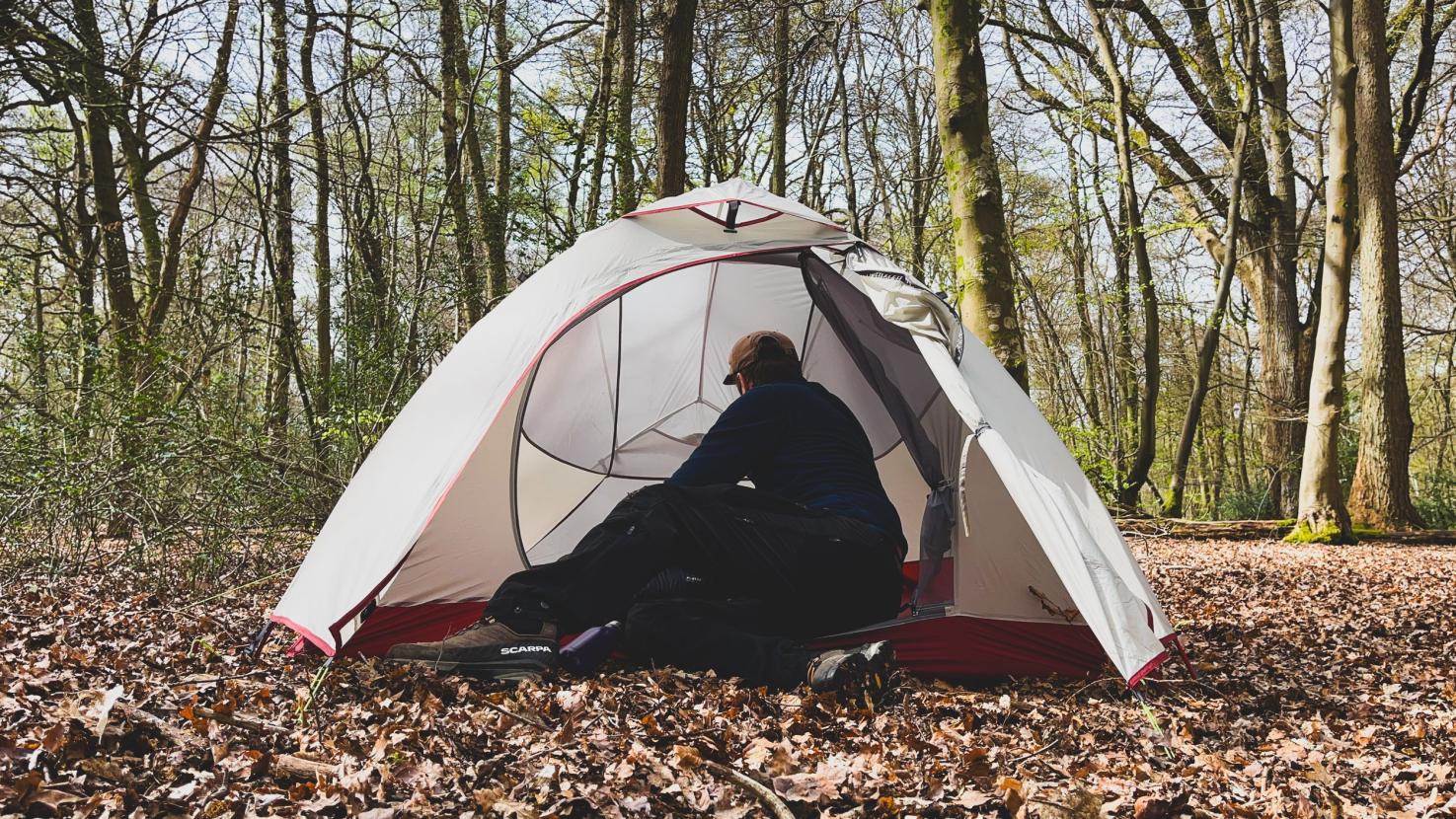
We first got our hands on a Naturehike Cloud Up 3 back in 2018, meaning by the time of writing, we have got almost 6 years of use out of ours. It has joined us on trips across Dartmoor, to the Lake District, on a ton of multi-dayers across Eryri National Park and on an untold number of overnighters in the mountains of Bannau Brycheiniog. What is more, we have used it fastpacking, bikepacking and in all 4 seasons, as well as putting it up against wild winds on some trips to the German, Swiss and Austrian Alps. And our impressions have been nothing but positive — especially considering we only paid £120 for it all of those years ago.
Features and performance
Pack size and weight
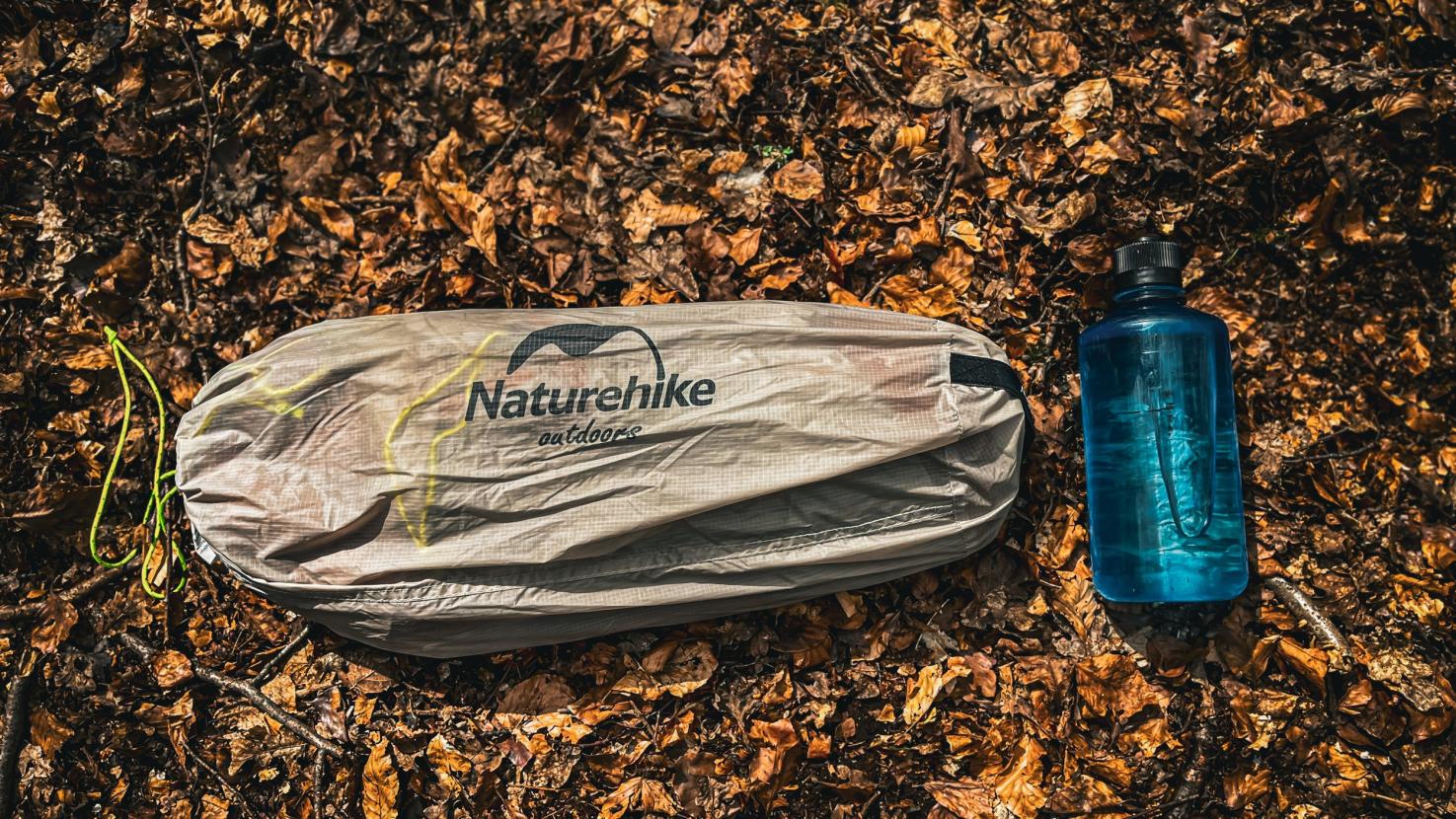
The first thing that really impresses us about the Naturehike Cloud Up 3 is the pack size and weight, which is super reasonable whichever way you look at it. It weighs just over 2 kg (2.24 to be exact) and packs down to the same size as something like the Robens Starlight 1 or The North Face Trail Lite 2. This makes it easy to chuck in the bottom of any backpack and — if you pack the poles separately — you can even get it in the bottom pouch of a 60-litre pack alongside your sleeping bag.
We have used the Cloud Up 3 a handful of times on various bikepacking trips across the UK and through the Alps. The tent packs down small enough to easily stuff into a 7-litre saddle bag, and the poles were the exact same length as a standard top tube — allowing us to lash them under or over the bike so they do not distract when pedalling.
Pitching and packing away
In standard free-standing dome tent style, the Naturehike Cloud Up 3 is an inner-pitch tent. This means you need to first peg out the inner and erect the poles before lashing the flysheet over the top. For this reason, the tent is best suited to 3-season weather when you know it is probably not going to rain, as putting it up in a deluge will result in the inner soaking out long before you can drape the waterproof flysheet overhead.
Thankfully, as is the case with the Big Agnes Fly Creek series, you can mount the poles directly over the groundsheet. This means you can create your dome structure without needing to put up the inner, allowing you to mount the inner under the fly after you have pegged everything out. To make this possible, you will need to always use the tent with a Naturehike groundsheet, which is purchased separately.
Livability
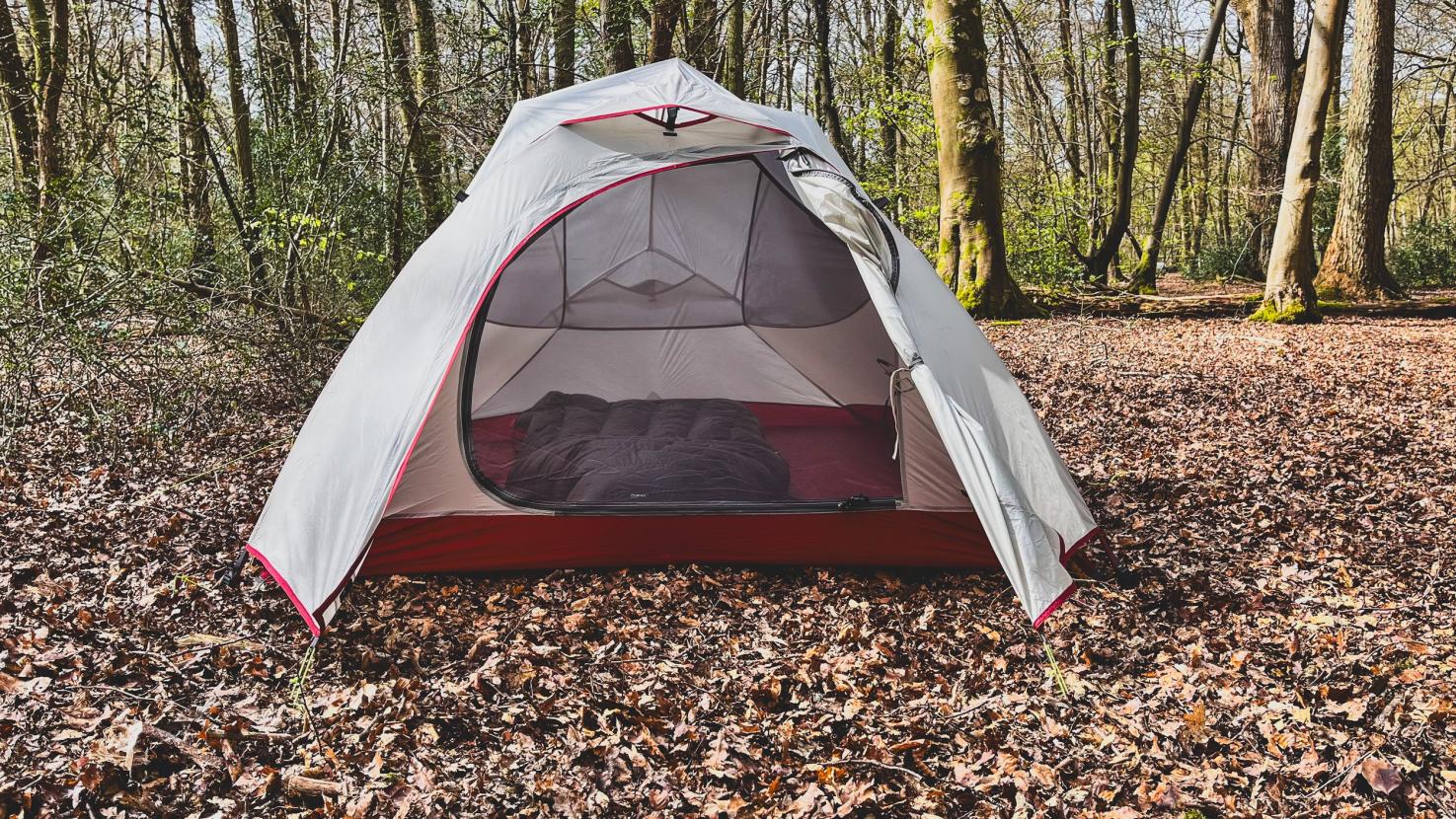
Like most 3-person tents, the Naturehike Cloud Up 3 is best suited to two people and kit. And even though at 180 cm in width you could fit three regular-sized sleeping pads in here, you will not have room for much else. One of our club members once used this tent with two others on a 3-day crossing of Germany’s Black Forest National Park and noted that it was an exceptionally tight squeeze, especially for the unlucky one in the middle.
For 2 people, however, the Cloud Up 3 offers plenty of room, coming with a spacious vestibule for storing boots and kit or for cooking out of the rain. The zip on the door does only go in one direction, which means you will need to open the door fully to properly ventilate when cooking — or you run the risk of carbon monoxide poisoning.
Inside the Cloud Up 3, there is plenty of room to sit up, change clothes, or while away long nights when the weather closes in. Thanks to a large ventilation port at the back of the tent, condensation is also manageable, although we did note substantial build-up when 3 bodies stayed overnight. When we used it as a pair or alone — as we would always recommend for a tent of this size — condensation was on par with what we experienced on more premium lines.
“In all that time, it’s never let us down. The poles never snapped or bowed, and everything popped back to life the second the wind let up — this tent is much more durable than it has any right to be.”
Build quality and durability
This section of our review is based on over 6 years of use. And in all that time, it has never let us down. One of our club members once pitched (albeit poorly) on a blowy top in the Shropshire Hills and woke up wearing it like a blanket. The wind came in overnight and completely flattened it. And even though very little sleep was had that night, the poles never snapped or bowed, and everything popped back to life the second the wind let up. That anecdote is merely to illustrate that the Naturehike Cloud Up 3 is much more durable than it has any right to be — especially when you consider its remarkably low price.
The flysheet is made out of 20D silnylon — something you would struggle to find on any other tent sub-£300. This makes the tent lighter and more packable and gives it a very premium feel when putting it up or packing it away. That said, due to the size of the flysheet on the 3-person model, it has a tendency to aggressively sag when used in a rainstorm. Thankfully, the flysheet never sagged so much that it touched the inner, although the difference was certainly noticeable the morning after.
How it compares to more premium lines
When compared with more premium lines, is there really a noticeable difference in quality? Well, yes and no. If you take a close look at the stitching on the Big Agnes Fly Creek versus the Cloud Up, there is no missing the quality difference. The more premium tent is simply better put together, cleaner and looks like it will last longer. The same applies to the poles: when packing down, the tips have a tendency to pop out, which results in the ever-painful process of trying to wiggle the elastic back into the tiny hole. On tents from the likes of Wild Country, MSR or Big Agnes, this never happens.
Overall, however, these are minor complaints that are more than acceptable for a sub-£200 shelter. We would also argue that, despite being up to 3 times the price, equivalent tents from big-name brands are not 3 times as good. Now do not misconstrue that as us saying the Naturehike can easily compete with branded lines: when it comes to the minor details and feature considerations the big players focus on, there is no comparison. But for many of us, those things probably do not matter enough to justify the substantially higher price.
One important caveat: Naturehike is not transparent about its manufacturing process, so there is no knowing how environmentally friendly (or damaging) these products are, nor any way to establish how ethical their production methods are. This is certainly not something you need to worry about when shopping at the likes of MSR, Big Agnes or The North Face.
| Ready for your next adventure?Sleep wild in Britain’s most beautiful national parksJoin guided wild camping adventures across the Scottish Highlands, Dartmoor, Eryri and more.Browse wild camping trips → |  |
Our verdictThe best-value 3-season backpacking tent you can buy right now.We really like the Naturehike Cloud Up 3. For the price, it is an exceptional 3-season tent ideal for 2 people and kit that lends itself well to so many different types of adventures it becomes a really versatile option at an unbeatable price. When compared side by side with more expensive lines, it is tough to tell the difference unless you get really close — and the fact that ours has already seen over 5 years of regular use without showing any signs of wear speaks to the quality Naturehike are able to produce on a budget.We are always happy to recommend the Cloud Up series to weight-conscious backpackers who are looking for a good shelter on a budget — and are looking to get many more years of use out of ours.Check price on Amazon →
FAQs
How does the Naturehike Cloud Up 3 perform in summer?Exceptionally well. Easy to pitch, well ventilated and super comfortable — it makes for a great 3-season backpacking tent in warm conditions.
How does the Naturehike Cloud Up 3 perform in winter?It is a decidedly 3-season tent. The mesh inner does not hold heat well. Naturehike sell snowskirt and panelled inner add-ons, but we would not recommend it for deep winter use even with those, as it is not designed to withstand heavy snowfall or sustained winter winds.
How does the Naturehike Cloud Up 3 perform in the wind?Surprisingly well. The aggressively rising corner poles give it good structural integrity — it shrugged off gusts up to 20 mph without incident in our testing. Not bombproof, but much stronger than it looks.
How easy is it to pitch the Naturehike Cloud Up 3?Very easy. Lay out the inner, add the poles, peg everything out, then clip the flysheet overhead using a simple clip-and-loop system. Takes minutes from start to finish.
Is the Naturehike Cloud Up 3 worth the money?Resoundingly yes. The Cloud Up 3 comes with premium specs — 20D silnylon fly, solid pole geometry, spacious vestibule — at a budget price. Few models out there right now offer lightweight backpackers better bang for their buck.